Why Expanding Medical Marijuana and Cannabidiol Research Matters for Patients and Clinicians
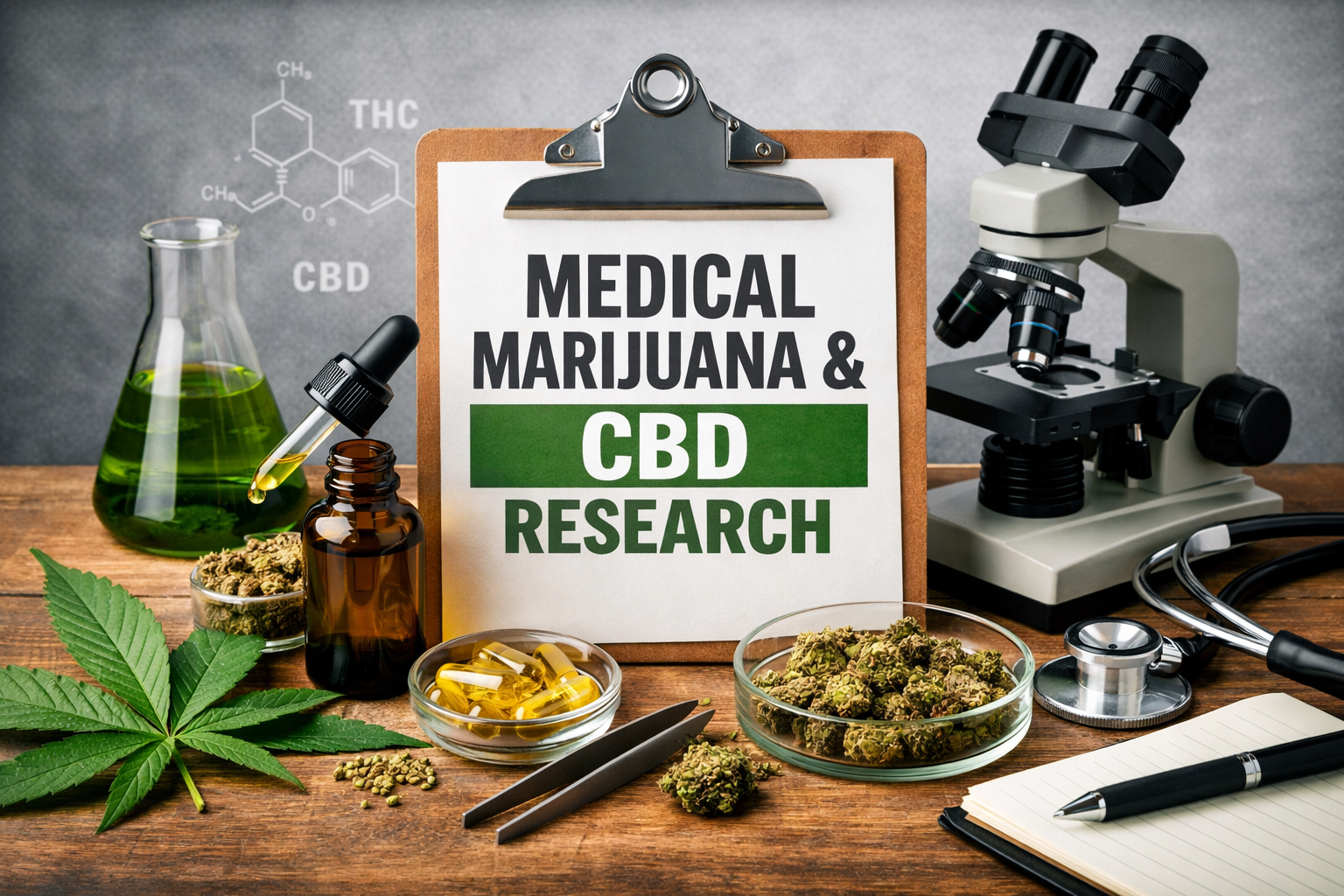
Medical marijuana and cannabidiol are widely used, but research has not kept pace. The FDA has identified credible medical uses, yet clinicians still lack clear guidance on safety and dosing. Expanding research helps ensure patient care is guided by evidence, not uncertainty.
Medical marijuana and cannabidiol are already part of everyday healthcare for millions of Americans, yet scientific research has not kept pace with real-world use. Patients routinely rely on these therapies for chronic pain, nausea, appetite loss, and other medically recognized conditions, often in the absence of clear clinical guidance. Expanding rigorous research is not about promoting or opposing any policy position. It is about ensuring that medical decisions are guided by evidence, safety data, and standardized best practices rather than uncertainty.
Chronic pain alone affects a substantial portion of the population, and many patients report meaningful symptom relief with medical marijuana. Reviews conducted by the Food and Drug Administration have identified credible scientific support for marijuana in the treatment of pain, chemotherapy-related nausea and vomiting, and appetite loss associated with certain medical conditions. Despite this, research restrictions have historically limited large-scale clinical trials, leaving physicians without clear dosing standards, interaction profiles, or long-term outcome data. This lack of information places both patients and clinicians at a disadvantage.
The research gap also raises patient safety concerns. Surveys indicate that many individuals using medical marijuana or CBD do not disclose use to their healthcare providers, particularly older adults who may already be managing multiple medications. Without robust evidence and clinical guidelines, providers are less equipped to identify drug interactions, contraindications, or population-specific risks. Expanded research would directly support safer care by giving clinicians the tools they need to counsel patients effectively.
Cannabidiol presents similar challenges and opportunities. CBD is widely used for pain and other symptoms, yet studies have found inconsistencies in product labeling and formulation. Some products contain different cannabinoid profiles than advertised, increasing the risk of unintended effects. High-quality research can inform standards for product composition, dosing, and quality control, ensuring that patients receive what they expect and clinicians can make evidence-based recommendations.
Real-world evidence further supports the need for expanded study. Patients have reported reduced reliance on opioids, improved pain control, and better quality of life when using medical marijuana or CBD. These findings deserve careful scientific evaluation through controlled trials and longitudinal studies. Understanding who benefits most, under what conditions, and with which formulations allows healthcare systems to integrate these therapies responsibly rather than leaving patients to navigate use on their own.
Strengthening the research infrastructure through institutions such as the National Institutes of Health and the Department of Health and Human Services helps translate widespread patient experience into reliable medical knowledge. It supports the development of clinical guidance, improves monitoring of long-term outcomes, and ensures that vulnerable populations are adequately studied.
Eexpanding medical marijuana and CBD research closes the gap between how these therapies are used and how well they are understood. Patients are already making decisions about their health based on personal experience and limited information. Investing in sound science ensures those decisions can instead be informed by evidence, safety, and clear clinical standards, which benefits patients, clinicians, and the healthcare system as a whole.